
IMMERSIVE TRAINING & DIGITAL OPERATIONS FOR MANUFACTURING

We help manufacturers modernise the factory floor. From assembly lines to advanced production cells, our XR, 3D Web, and AI solutions enable teams to visualise workflows, train operators, and optimise processes with greater clarity and control.

XR TECHNOLOGIES DESIGNED FOR MODERN MANUFACTURING

XR and AI are reshaping how manufacturing plants operate. With VR and AR, operators can safely practise machine setups, changeovers, and emergency procedures without stopping production. Combined with 3D scans, CAD models, and digital twins, organisations gain real-time visibility into their lines and facilities, improving training, quality, and coordination while reducing downtime and errors.

  • How Virtual Reality Is Advancing the Manufacturing Industry

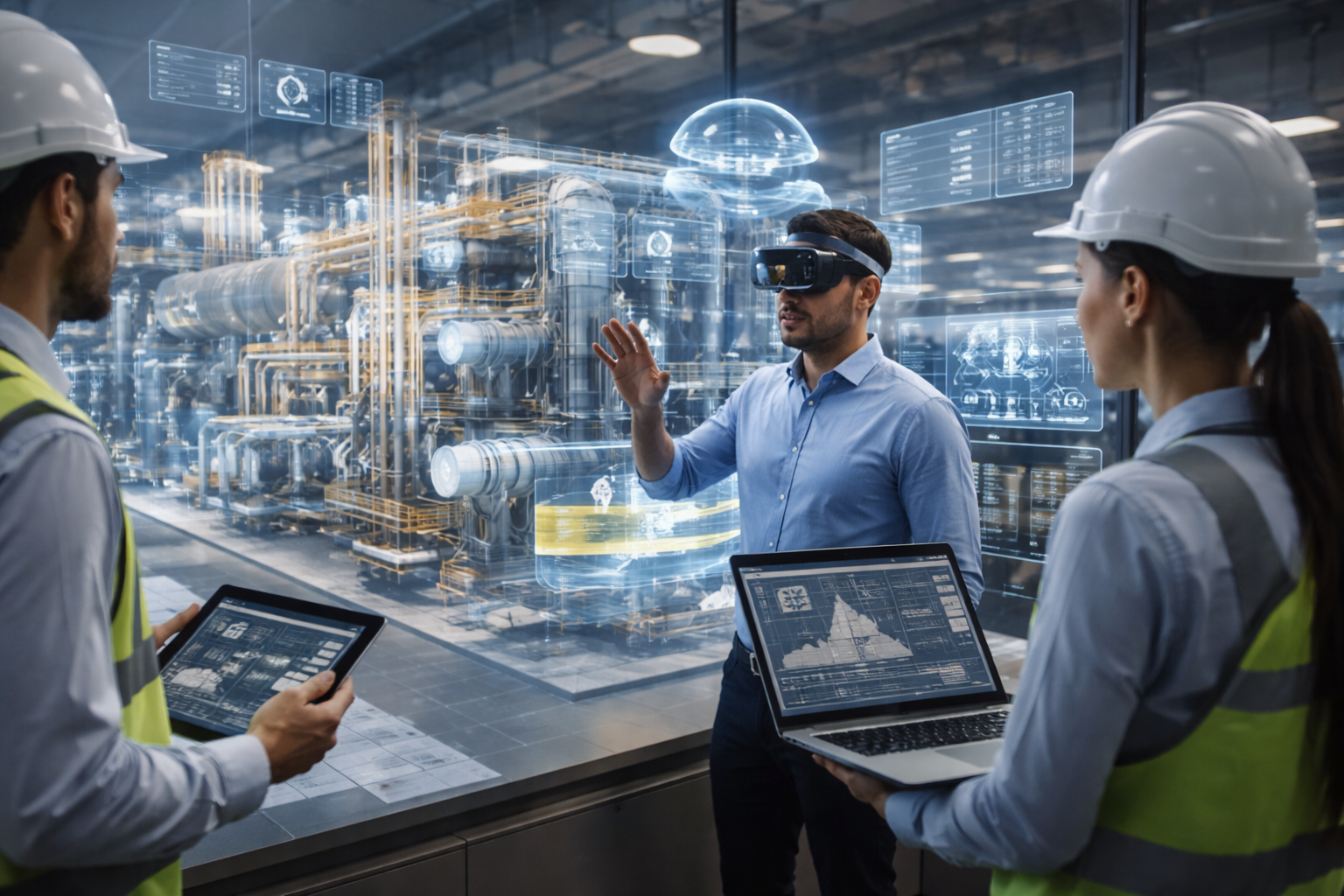
    Virtual reality is being used in manufacturing to design, validate, and optimize production environments before physical changes are made. Engineers can walk through virtual factories to evaluate line layouts, equipment placement, ergonomics, and material flow. This immersive approach helps identify bottlenecks, safety risks, and inefficiencies early, reducing costly rework once machinery is installed. VR also supports rapid iteration, allowing teams to test multiple configurations and processes without disrupting live operations.

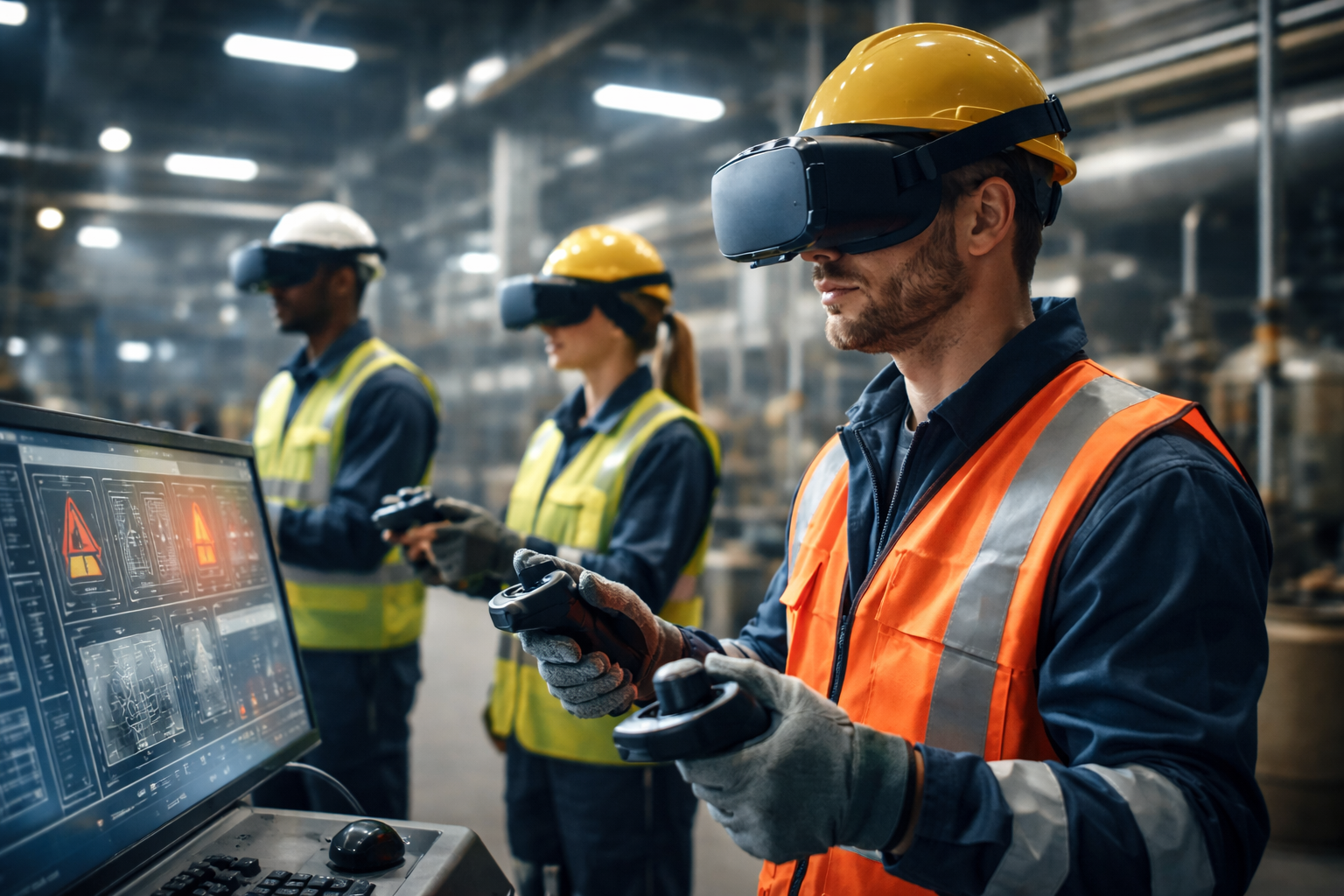
    VR is also transforming workforce training in manufacturing. Operators can practice machine operation, maintenance procedures, and emergency responses in realistic simulations that mirror real factory conditions. This reduces onboarding time and improves consistency across shifts and facilities. By allowing workers to build confidence and muscle memory in a safe environment, VR contributes to higher productivity, fewer accidents, and improved quality on the shop floor.

    Immersive training solutions
  • Digital Instructions at the Point of Work

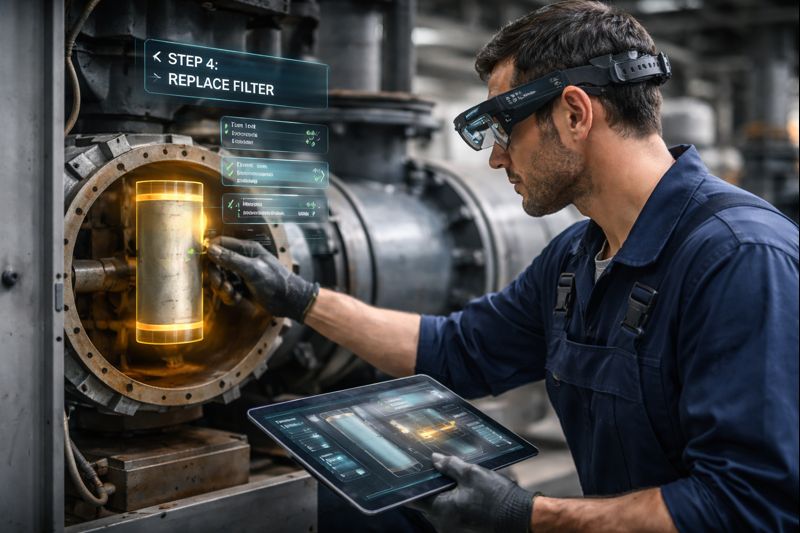
    Augmented and mixed reality bring critical information directly to manufacturing workers as they perform tasks. Assembly instructions, quality checks, and torque specifications can be overlaid onto physical parts and machinery, reducing reliance on manuals or separate screens. This real-time guidance helps minimize errors and supports more flexible production, especially in high-mix, low-volume environments where tasks change frequently.

    Mixed reality also improves collaboration and remote support within manufacturing operations. Experts can assist technicians by seeing the same equipment view and adding visual annotations that stay anchored to the machine. This shortens troubleshooting time and reduces downtime for critical assets. By combining digital knowledge with hands-on work, AR and MR enable faster problem-solving and more resilient production systems.

    3D product and customer experiences
  • How AI Can Push Manufacturing Forward

    Artificial intelligence is reshaping manufacturing by enabling smarter decision-making across the entire production lifecycle. AI models analyze data from sensors, machines, and quality systems to predict equipment failures and optimize maintenance schedules. This predictive maintenance approach reduces unexpected downtime and extends the life of expensive assets. AI also improves quality control by detecting defects in real time through computer vision and pattern recognition.

    AI plays a key role in optimizing production planning and supply chains. Machine learning algorithms can forecast demand, adjust schedules, and optimize inventory levels based on real-world conditions. In advanced manufacturing, AI supports generative design and process optimization, helping engineers balance cost, performance, and sustainability. These capabilities allow manufacturers to respond faster to market changes and operate more efficiently.

    Spatial tools for field teams
  • Manufacturing Meets the Interactive Web

    The 3D web enables manufacturers to share and explore production environments, products, and processes directly in a browser. Factory layouts, assembly lines, and equipment can be viewed interactively without requiring specialized software. This improves communication between engineering, operations, management, and external partners by providing a shared visual reference that is easy to access and understand.

    Looking ahead, the 3D web can support lightweight digital twins that connect live production data to 3D representations of manufacturing assets. Machine status, throughput metrics, and quality data can be visualized in spatial context, helping teams monitor performance and identify issues more quickly. By making manufacturing data more visible and accessible, the 3D web can support better decisions and continuous improvement across the industry.

    AI insights and automation

Discover Our Projects & Client Results

We partner with innovators in construction, manufacturing, retail, and architecture to bring immersive solutions to life. From training to sales to operations.

How We Work With You To Deliver

Every organisation is at a different point in their XR and AI journey. Our process is designed to meet you where you are, whether you are exploring an idea, validating a concept, or scaling an existing solution.

01. Discovery & Strategy

We start by understanding your goals, users, operational context, and existing systems. Through collaborative workshops and conversations, we identify high value use cases, define clear success metrics, and establish a practical roadmap aligned to your business priorities.

02. Concept Design & Prototyping

We turn early ideas into simple visuals and hands-on demos that people can see and use. This helps everyone agree on what is being built, test ideas early, and fix issues before investing time and budget into full development.

03. Development & Integration

Our team builds the solution using production ready tools and proven workflows. This includes 3D content, interaction design, backend services, system integrations, and AI components. We deliver in structured milestones so progress is visible and testable throughout.

04. Deployment & Ongoing Support

We support deployment into real world environments and help ensure a smooth rollout. After launch, we can assist with feedback collection, performance optimisation, and iterative improvements, providing ongoing support if you need it.

Ready To Start A New Project?

Tell us about your idea, use case, or challenge and we will respond with clear options and recommended next steps. No jargon and no pressure.