AR, VR & 3D WEB FOR INFRASTRUCTURE & ASSET MANAGEMENT

We help infrastructure owners, operators, and engineering teams see their assets more clearly. Using AR, VR, 3D Web, and AI, we turn plans, point clouds, BIM models, and inspection data into interactive tools that improve planning, maintenance, and operational decision-making.

IMMERSIVE TECHNOLOGIES FOR INFRASTRUCTURE & CRITICAL ASSETS

Infrastructure projects are complex, long-lived, and high-stakes. Immersive technologies allow teams to visualise networks and structures in context, rehearse procedures, and understand risks before work begins. From transport corridors and utilities to large facilities and precincts, we help you use XR and AI to manage assets more safely and efficiently across their full lifecycle.

  • Building Tomorrow Before It Exists

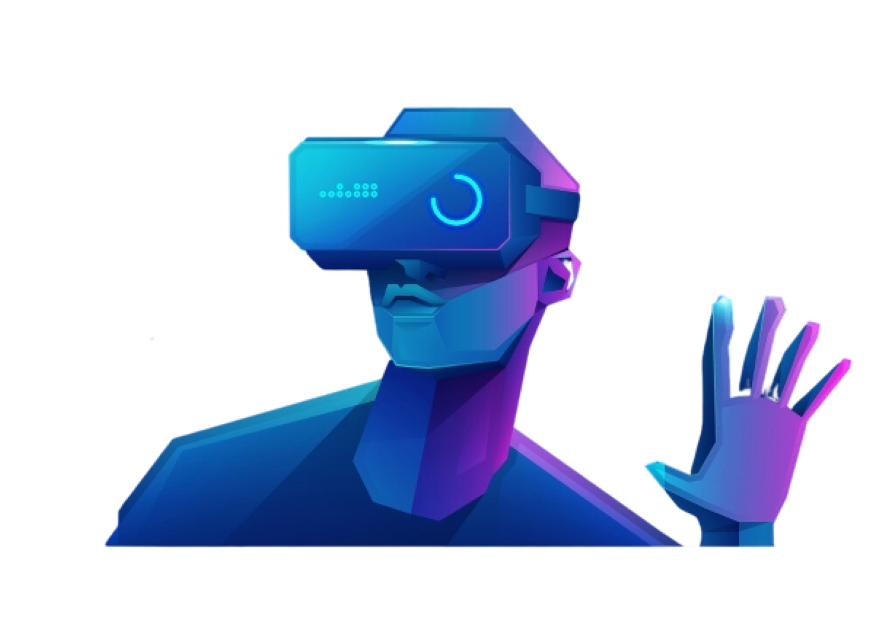
    Virtual reality is advancing the infrastructure industry by allowing engineers, planners, and stakeholders to step inside large-scale projects long before construction begins. VR is used to visualize roads, bridges, tunnels, rail corridors, and utilities in full scale, making complex designs easier to understand and evaluate. This immersive perspective helps teams identify design conflicts, safety risks, and accessibility issues early, when changes are far less costly. For public projects, VR also improves communication by giving non-technical stakeholders a clear and intuitive way to experience proposed infrastructure.

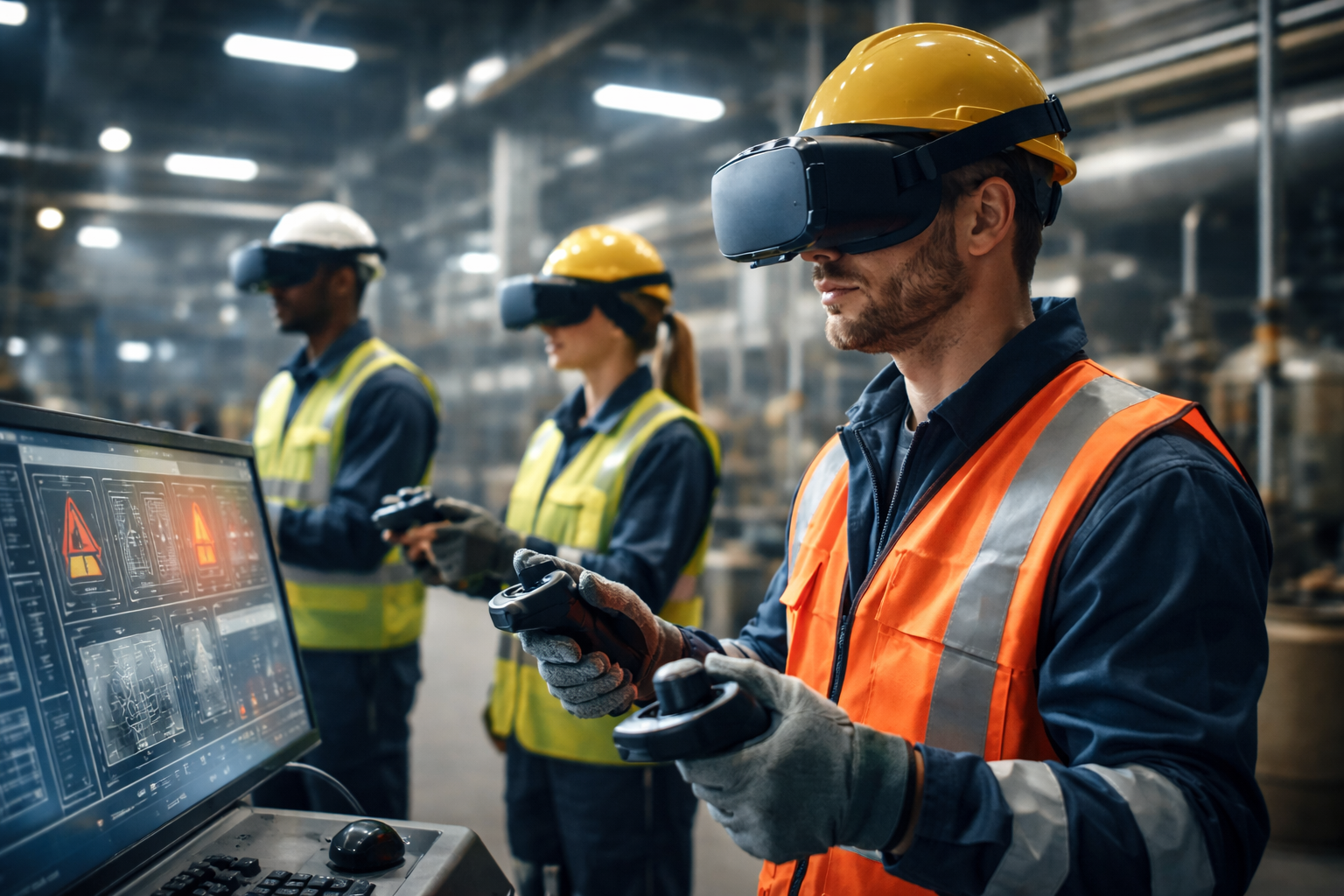
    Beyond design, VR plays a growing role in training and safety preparation. Construction crews and maintenance teams can rehearse high-risk tasks such as working at height, operating heavy machinery, or responding to emergency scenarios without exposing workers or equipment to danger. Infrastructure owners also use VR for lifecycle planning, simulating maintenance procedures and long-term wear to better anticipate future needs. These applications improve readiness, reduce incidents, and support smarter investment decisions across the lifespan of critical assets.

    Immersive training solutions
  • Overlaying Insight on the Physical World

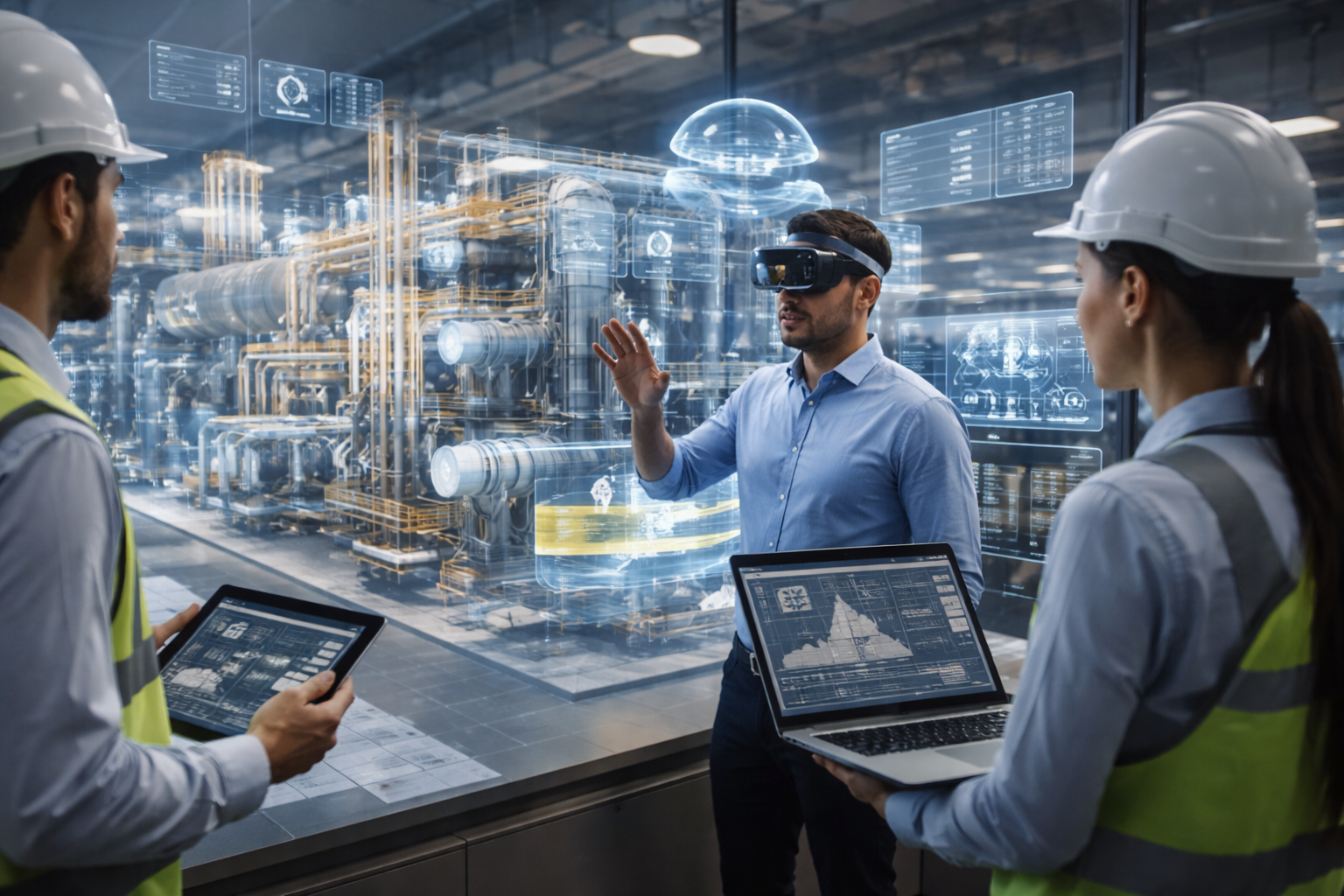
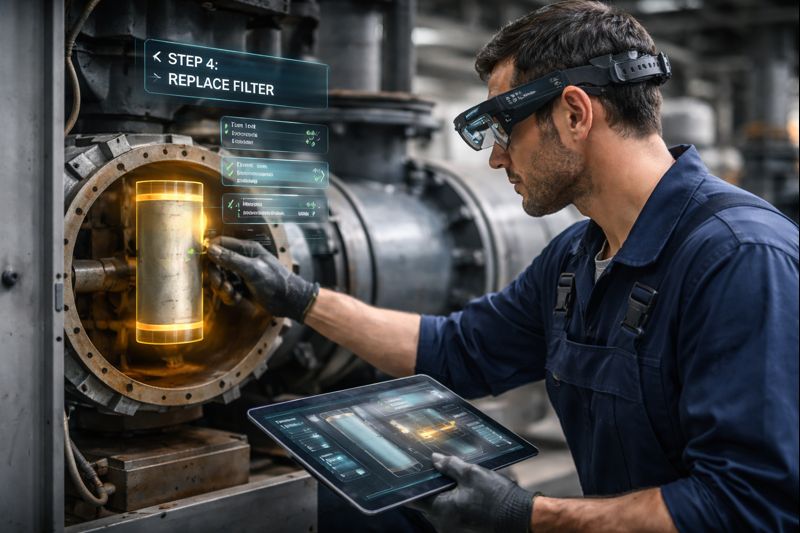
    Augmented reality and mixed reality are transforming infrastructure by delivering real-time, spatially accurate information directly into the field. Using AR-enabled tablets or headsets, workers can see underground utilities, structural elements, or installation guides overlaid on the physical environment. This reduces reliance on paper drawings and minimizes errors during construction, inspection, and repair. AR also helps teams verify that work aligns with design specifications, improving accuracy and reducing costly rework.

    Mixed reality enhances collaboration by allowing digital models to remain anchored to real-world infrastructure. Engineers, inspectors, and supervisors can walk through a site together while viewing the same virtual data layers, even from different locations. MR is increasingly used for remote assistance, enabling experts to guide field crews visually without traveling to the site. By merging digital context with physical reality, AR and MR make infrastructure work more precise, efficient, and connected.

    3D product and customer experiences
  • Smarter Systems, Smarter Decisions

    Artificial intelligence is pushing the infrastructure industry forward by turning vast amounts of data into actionable insight. AI models analyze sensor data, inspection records, and historical performance to predict asset degradation and schedule maintenance before failures occur. This shift from reactive to predictive maintenance improves reliability while reducing downtime and repair costs. AI also supports traffic optimization, energy management, and resource allocation, helping infrastructure systems operate more efficiently under changing conditions.

    In planning and delivery, AI accelerates design and decision-making. Machine learning tools evaluate multiple design scenarios, construction methods, and timelines to identify optimal solutions based on cost, safety, and sustainability. Computer vision automates inspections of roads, bridges, and rail assets using drones or fixed cameras, reducing manual labor while increasing coverage and consistency. By augmenting human expertise with data-driven intelligence, AI enables infrastructure owners to build and maintain systems that are more resilient and adaptive.

    Spatial tools for field teams
  • Infrastructure in an Interactive Browser

    The 3D web is emerging as a powerful platform for sharing and interacting with infrastructure data beyond traditional desktop software. Web-based 3D environments allow engineers, planners, and decision-makers to explore infrastructure models directly in a browser without specialized tools. These experiences make it easier to review designs, monitor construction progress, and communicate complex spatial information across organizations. Public agencies also use 3D web platforms to improve transparency by helping communities understand proposed projects and their impact.

    As the technology matures, the 3D web can become a foundation for connected digital twins of infrastructure systems. Live data from sensors and operational systems can be visualized in real time within interactive 3D environments, accessible from anywhere. This enables cross-disciplinary collaboration, faster decision-making, and more informed asset management. By lowering the barrier to accessing spatial data, the 3D web supports a more open, collaborative, and data-driven approach to infrastructure development and operations.

    AI insights and automation

Discover Our Projects & Client Results

We partner with innovators in construction, manufacturing, retail, and architecture to bring immersive solutions to life. From training to sales to operations.

How We Work With You To Deliver

Every organisation is at a different point in their XR and AI journey. Our process is designed to meet you where you are, whether you are exploring an idea, validating a concept, or scaling an existing solution.

01. Discovery & Strategy

We start by understanding your goals, users, operational context, and existing systems. Through collaborative workshops and conversations, we identify high value use cases, define clear success metrics, and establish a practical roadmap aligned to your business priorities.

02. Concept Design & Prototyping

We turn early ideas into simple visuals and hands-on demos that people can see and use. This helps everyone agree on what is being built, test ideas early, and fix issues before investing time and budget into full development.

03. Development & Integration

Our team builds the solution using production ready tools and proven workflows. This includes 3D content, interaction design, backend services, system integrations, and AI components. We deliver in structured milestones so progress is visible and testable throughout.

04. Deployment & Ongoing Support

We support deployment into real world environments and help ensure a smooth rollout. After launch, we can assist with feedback collection, performance optimisation, and iterative improvements, providing ongoing support if you need it.

Ready To Start A New Project?

Tell us about your idea, use case, or challenge and we will respond with clear options and recommended next steps. No jargon and no pressure.