AUGMENTED AND VIRTUAL REALITY FOR LOGISTICS & SUPPLY CHAIN

We build immersive tools for logistics, warehousing, and supply chain to train teams, visualize fleets, and streamline decision-making.

XR TECHNOLOGIES BUILT FOR LOGISTICS & SUPPLY CHAIN

Immersive technologies are upgrading logistics and warehousing. Use AR and VR to train staff safely, visualize operations in 3D, and coordinate teams with shared, accessible tools, reducing errors and accelerating workflows.

  • Walking Through the Supply Chain

    Virtual reality is advancing the logistics industry by making complex supply chains easier to visualize, test, and optimize. Logistics providers use VR to simulate warehouses, distribution centers, ports, and transportation hubs at full scale, allowing teams to evaluate layouts, workflows, and equipment placement before making physical changes. This immersive planning helps identify bottlenecks, safety concerns, and inefficiencies early, reducing costly redesigns and downtime. VR also supports scenario planning, enabling organizations to explore how disruptions such as demand spikes or route changes affect operations.

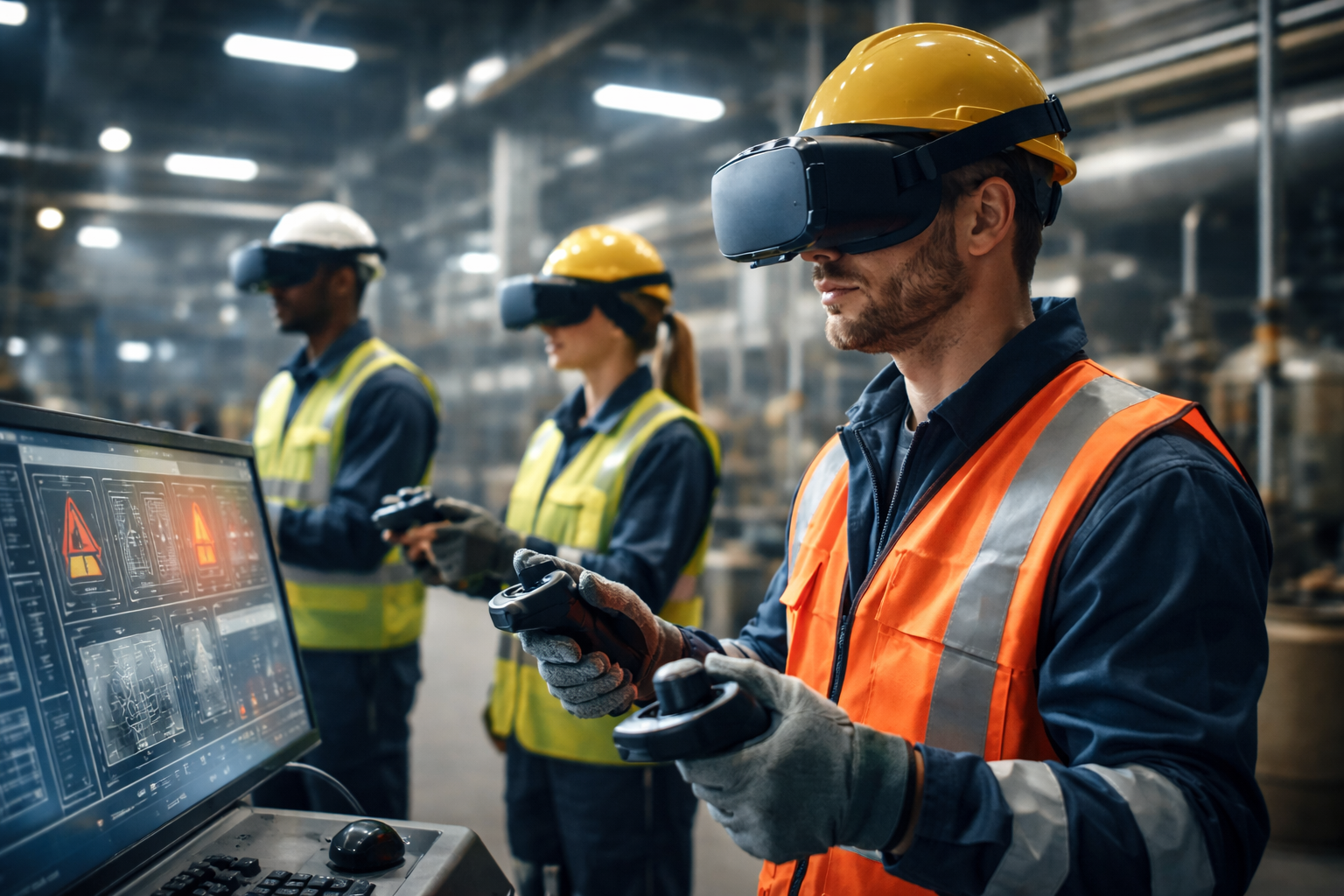
    VR is also becoming a valuable tool for workforce training and preparedness. New employees can learn warehouse navigation, picking procedures, and equipment operation in a realistic environment without disrupting live operations. Safety training benefits significantly, as workers can practice responding to hazardous situations or emergency scenarios without real-world risk. These immersive training programs improve retention, reduce onboarding time, and help build a more confident and capable logistics workforce.

    Immersive training solutions
  • Real-Time Guidance in Motion

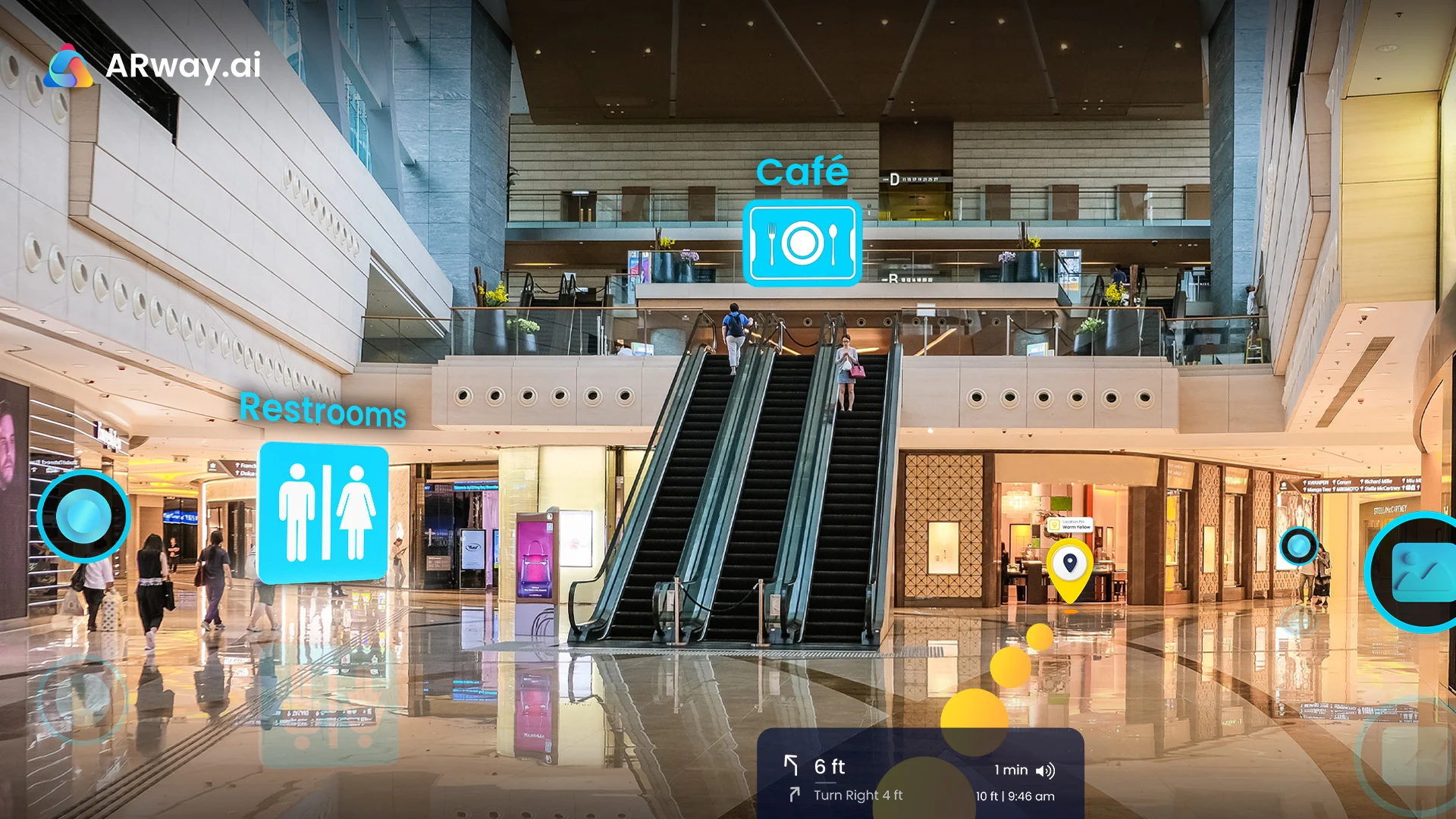
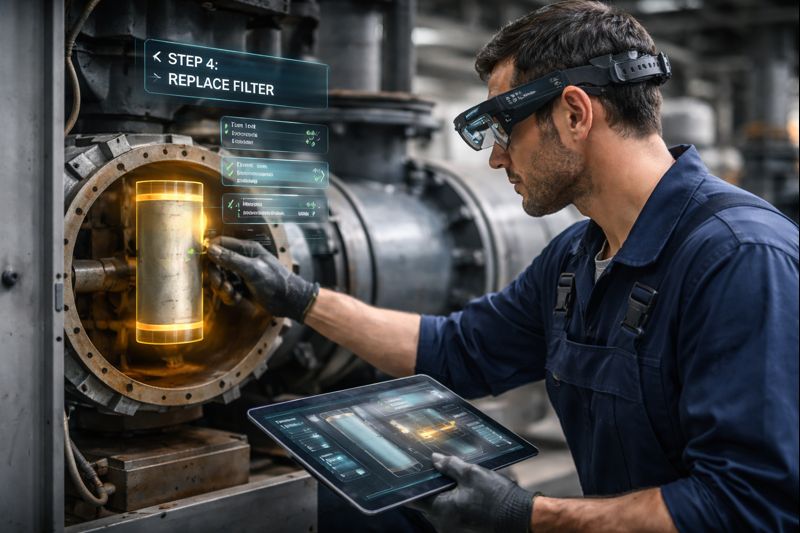
    Augmented reality and mixed reality are transforming logistics by delivering contextual information directly to workers as they move through physical environments. AR-powered picking systems guide warehouse staff visually to the correct items and locations, reducing errors and speeding up fulfillment. Load planning, pallet stacking, and container packing can be supported with visual overlays that show optimal placement and weight distribution. These tools improve accuracy while reducing cognitive load for workers operating in fast-paced environments.

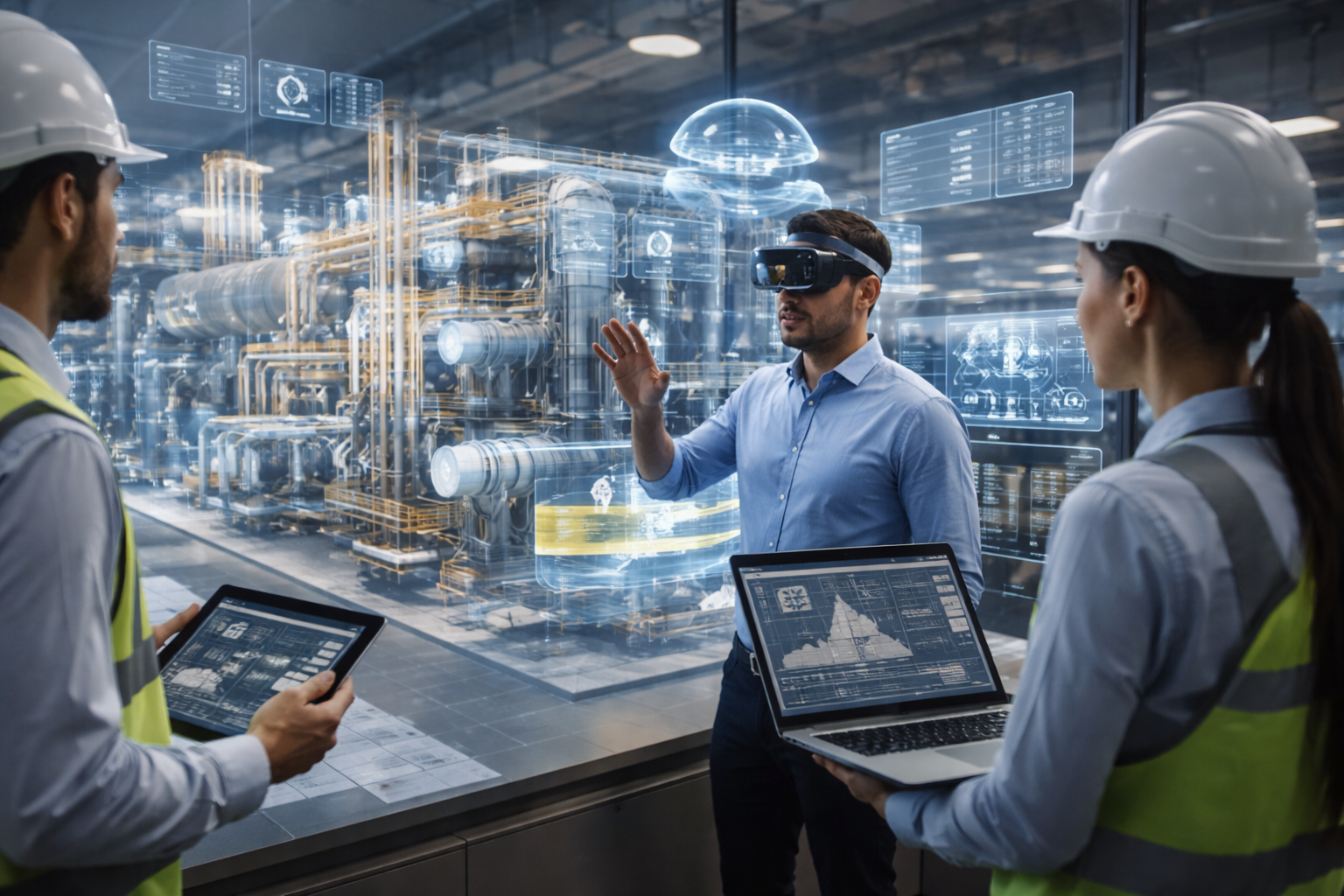
    Mixed reality enables deeper integration between digital systems and physical logistics operations. Supervisors can view live operational data, such as order status or equipment health, anchored to real-world locations within a facility. Remote experts can collaborate with on-site teams through shared MR views, assisting with troubleshooting or process optimization. By blending digital insight with physical movement, AR and MR help logistics operations become more efficient, safer, and easier to scale.

    3D product and customer experiences
  • Intelligence Driving Every Movement

    Artificial intelligence is pushing the logistics industry forward by optimizing decision-making across the entire supply chain. AI-driven demand forecasting and inventory optimization help organizations position goods more effectively, reducing excess stock and minimizing delays. Route optimization algorithms continuously adjust delivery paths based on traffic, weather, and real-time conditions, lowering fuel costs and improving on-time performance. Automated customer communication powered by AI also improves transparency and satisfaction.

    In operations, AI enhances visibility and resilience. Computer vision systems monitor warehouses and yards to track inventory, detect damage, and ensure safety compliance. Predictive maintenance models analyze equipment data to anticipate failures before they disrupt operations. AI also supports strategic planning by simulating supply chain scenarios and evaluating trade-offs between cost, speed, and reliability. These capabilities allow logistics providers to operate with greater agility in an increasingly complex global environment.

    Spatial tools for field teams
  • Visualizing Logistics in Three Dimensions

    The 3D web is opening new ways to understand and manage logistics systems through interactive, browser-based environments. Web-based 3D models allow teams to explore warehouses, fleets, and distribution networks without installing specialized software. This makes it easier to collaborate across locations, review operational layouts, and communicate changes to stakeholders. Training, onboarding, and process documentation also benefit from interactive 3D representations that are more intuitive than static diagrams.

    Looking ahead, the 3D web can serve as a shared interface for logistics digital twins. Real-time data from tracking systems, sensors, and enterprise platforms can be visualized within live 3D environments accessible to planners, operators, and partners. This unified view supports faster decision-making, clearer communication, and better coordination across the supply chain. By making complex logistics systems more visible and interactive, the 3D web helps drive efficiency and continuous improvement.

    AI insights and automation

Discover Our Projects & Client Results

We partner with innovators in construction, manufacturing, retail, and architecture to bring immersive solutions to life. From training to sales to operations.

How We Work With You To Deliver

Every organisation is at a different point in their XR and AI journey. Our process is designed to meet you where you are, whether you are exploring an idea, validating a concept, or scaling an existing solution.

01. Discovery & Strategy

We start by understanding your goals, users, operational context, and existing systems. Through collaborative workshops and conversations, we identify high value use cases, define clear success metrics, and establish a practical roadmap aligned to your business priorities.

02. Concept Design & Prototyping

We turn early ideas into simple visuals and hands-on demos that people can see and use. This helps everyone agree on what is being built, test ideas early, and fix issues before investing time and budget into full development.

03. Development & Integration

Our team builds the solution using production ready tools and proven workflows. This includes 3D content, interaction design, backend services, system integrations, and AI components. We deliver in structured milestones so progress is visible and testable throughout.

04. Deployment & Ongoing Support

We support deployment into real world environments and help ensure a smooth rollout. After launch, we can assist with feedback collection, performance optimisation, and iterative improvements, providing ongoing support if you need it.

Ready To Start A New Project?

Tell us about your idea, use case, or challenge and we will respond with clear options and recommended next steps. No jargon and no pressure.